
Envy and jealousy plague the lives of good people. Yes, good people! Goodhearted individuals try hard to dispel those feelings but they persist in tormenting us, no matter how virtuous we are.
It could be we are troubled by an inability to believe in our own lovableness. Perhaps we suffer from poor self-images.
Whatever the reason, we frequently look around, see the luck and fortune others seem to enjoy and feel a twinge of envy. We crave what they have and long to change places with them.
The presumption is this “good” has come with no cost to the receivers. Sensing our lack, we feel deprived. Deprivation lends itself to jealousy. Anxiously, we hold tightly to our own possessions, gifts, talents, abilities, fearing that sharing them will result in diminishment or loss of what we have and who we are. Erroneous perceptions can lead to needless, death-dealing unhappiness.
In reality, “I do not mean that there would be relief for others and pressure on you, but it is a question of a fair balance between your present abundance and their need, so that their abundance may be for your need, in order that there may be a fair balance. As it is written, ‘the one who had much did not have too much, and the one who had little did not have too little.’” [II Corinthians. 8:13-15]
This is a reasonable philosophy and equitable lifestyle. Why is it that we seem so reluctant to accept and integrate it? Why do we allow envy and jealousy to draw us into the trepidation and possessiveness that eat away at faithfulness, selflessness, and “other-centeredness?”
Why are we so afraid to act justly and love tenderly? Why do we let fear be our prison when we could be faithful and free?
I do not know the answers to those questions. Old as humankind, they can only be answered individually and experientially as each individual confronts fear and deepens faithfulness. It matters little whether we are richly “educated in religion,” like Jairus, the synagogue official, or simply impoverished, afflicted people, like the hemorrhaging woman.
What matters is that we personally discover, acknowledge, and contemplate the truth in the statement: “Do not fear, only believe.” [Mark. 5:36]
How easy it is to say those words. How difficult it is to enliven them. However, those are the statements we must move from philosophic musing to pragmatic meaning. If we choose to believe and trust God’s goodness, those words must be swords that pierce human hearts and affect the very marrow of our being.
Contrary to the oft-quoted Mae West comment, we believe, “Goodness has everything to do with it, my dear!”
“God did not make death, and God does not delight in the death of the living.” [Wisdom. 1:13]
The divine will is directed to life giving and lifesaving, to enhancement and enrichment. God does not find joy in our morbid preoccupations. God does not dictate distress, sees no solace in senseless suffering, no comfort in chaos. We need to embrace vitality, especially during times of duress. We need to dispel envy and jealousy, viewing them as enemies that seek to destroy life.
We need to believe as Jairus believed, begging and pleading for Jesus to touch our critically ill “child” and bring us back to healthy living. Even when his household informed him of his daughter’s death, Jairus had faith. Even when he was advised not to bother the teacher further, he continued believing in the power of God.
Jairus could have given up. He could have chosen to listen to and accept the recommendation of his friends. He could have succumbed to his worst fears. He could have been “practical” or “realistic,” electing not to hope against hope any longer. Instead, Jairus joined Jesus, disregarding the report he had received.
By his action, Jairus expressed the profound conviction that fear is useless. What is needed is trust.
Equally but differently trusting was the hemorrhaging woman. Relentlessly unrelieved, after having spent all her savings searching for a cure, she believed in healing touch and made a crucial decision. Aware of the law, she sought a way to touch Jesus without rendering him unclean.
Courageously, knowing that she courted the ire of the crowd, the woman moved closer and closer, until she could touch Jesus’ clothing and be cured. It certainly was not easy for her to believe. Nor was it easy for her to act on that belief, but she did, and was cured. “The woman, knowing what had happened to her came in fear and trembling, fell down before him, and told him the whole truth.” [Mark. 5:33]
Fear is useless. Trust is needed.
At one time or another, we are Jairus. We are the hemorrhaging woman. Afraid, we fall at the feet of Jesus and make apparently impossible requests. We seek the touch of Jesus for healing. We dare to touch him—ever so slightly, only the edge of his clothing—so that the unrelieved suffering we endure will dissipate and disappear. In desperation, knowing that the “illness” is critical and exhausted with the attempt of handling it all by ourselves, we come to Jesus.
Interestingly, we do not come alone, but accompanied by crowds of people eager to see God working in our lives. They want to believe more deeply, too. Our relief is their relief. Our richness is their richness.
Our belief in the uselessness of fear empowers their trust. We are Jesus for each other.
Touching and healing, being touched and being healed, we feel Jesus’ curative power emanating from us, and recognize faith’s potency. Undismayed by loud wailings of opposition, we work to see beyond the appearances of death.
Dismissing ridicule, we join hands with the poor and needy, the anawim, to help them hear God’s gentle command, “Little ones, get up!”
Givers and receivers of healing love that we are not impoverished by the relief others receive. We are only made richer in our own capacity to love. The plenty we presently have does indeed supply others’ lack so that, one day they will reciprocate, to meet our need.
Where God reigns there is neither excess nor lack, but equality of justice for all.
Alive in Christ, envy and jealousy may still plague us, but they shall not be instruments used to subdue nor terrorize anyone. Ours is a radical commitment to the rich and wholesome life of God’s people.
We believe that fear is useless. Trust is all we need.
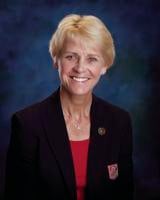
Fran Salone-Pelletier has a master’s degree in theology and is the author of Awakening to God: The Sunday Readings in Our Lives [a trilogy of Scriptural meditations], lead chaplain at Brunswick Novant Medical Center, religious educator, retreat leader, lecturer and grandmother of four. She can be reached at grammistfran@gmail.com.
Add new comment
Read and share your thoughts on this story