
The young man was bright and breezy. He exuded the optimism and freshness of youth. There was no doubting his sales ability. There was also no doubting his hopefulness and trust in the resiliency of humankind.
Seated around tables laden with delicious food were the somewhat jaded oldsters who had entered retirement with equally high hopes and were now swimming in a media sea of negativity. Rather than pretend the market was bull and not bear, rather than ignore the rising gas prices and their impact on the marketplace, he fastened a sheet of paper to the wall and asked his audience to list all the dark occurrences of the past eight or more years—ones that will likely be recorded in future history books as a reminder of dire reality.
Interestingly, no one spoke. I wondered about the silence. Could it be we were unaware of all that had happened during these recent years? Could it be we were so wrapped up in our own little worlds that we were blind to anything beyond them? Somehow I doubted this was the case. We were intelligent people, people who are highly involved in the local community. We did not fit the category of the apathetic or ignorant ones. Nor were we those in denial and avoidance.
I think it was the pain of the question that plugged up our response. We knew only too well the past decade carried with it a daunting list of tragic events. It had brought a 48 percent drop in the Standard and Poor rating that could clearly be classified as a recession, despite any contrary definition by economists. There was the devastating and long-range effect of the 9/11 attacks, the fright of the various Asian contagions—SARS and bird flu—accompanied by a European scare with Mad Cow disease. There was the near impeachment of our president and its companion cover-up, skirting of truth and skillfully sly redefinition of terms.
During those years, corporate America went to jail. Words like Enron were tossed about with disgust and dismay. We entered war, not just “a war,” but a warring stance that continues to this moment. The dollar weakened beyond all expectations. The price of oil rose and keeps rising. At the same time, housing sales dropped. Foreclosures were and are rampant. A credit crisis began and has continued.
What more could we paint into this picture to blacken it—and our outlook on life? Surely, our silence was an understandable response.
But the presenter smiled and reminded us hope is eternal. For each dark item he offered an alternate viewpoint of light. Brightness revoked the gloom. He recalled there was a striking upward surge in the market at the very time it had hit a low. He helped us to remember we had indeed lived through all that chaos and were sitting in front of him, hale and hearty. For our edification, he offered the strengths that come with a weak dollar and offset its potentially tragic outcome.
Although his vocabulary was that of an investment banker, a retirement planner, one could easily substitute words of faith to his message. At its essence, his message was to encourage us, to help us to trust that severe darkness is pierced by a great light, if only we will believe.
This was not the discourse of a cockeyed optimist. It was the realistic hope of someone who wishes to support others to seek the best, no matter if all looks worse. We could sit on our hands and do nothing but moan and groan about all that is and isn’t right with our world, or we can get up and do something about it. We can hear the biblical injunction to look at the lilies of the field and hear it as a call of futility, or we can see the beauty that is gift, reverence it, and put it to use.
Hope against hope. Believe and do not weaken in faith. Become ever more aware of all that is good and true and proclaim its goodness and truth. Know that even in the midst of hellishness, the heavenly kingdom of God is at hand. As the Gospel of Matthew enjoins us, “Make the proclamation...cure the sick, raise the dead, cleanse lepers, drive out demons. Without cost you have received; without cost you are to give.” [Matthew 10: 8]
But do not go forth in naive refusal to recognize the choking weeds in which the wheat of goodness is growing. Do not think that the sole answer is to remove the deadly weeds. The result might be disastrous. Instead, learn how to work the ground, carefully tending it and encouraging growth of the desired crop. Faith and facts must inform each other.
In like manner, our young presenter admonished we had hard work to do. We had to sit down and decide what we wanted for our future. What was it we needed in order to live? We had to face our facts. It was a task for each one of us individually. We had to know clearly who we were and what we desired before we could begin to discuss it with a spouse, significant other, friend, family, whomever.
Planning for our religious “end time” and investing for a fiscally secure future have much in common. In neither case can we waste time and energy keeping our heads in the sand and hoping all the “bad stuff” will go away on its own. In both instances, we must prepare realistically and with faith. We must share our plans and knowledge with others so they, too, might know this is the best of times and the worst of times. But it is also the only time we have.
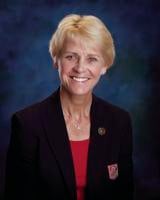
Fran Salone-Pelletier has a master’s degree in theology and is the author of Awakening to God: The Sunday Readings in Our Lives [a trilogy of Scriptural meditations], lead chaplain at Brunswick Community Hospital, religious educator, retreat leader and lecturer.
Add new comment
Read and share your thoughts on this story