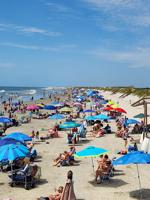

"When you’re lucky enough to live by the ocean, you’re lucky enough.”
We have all heard this saying or seen it on one of those cute little signs at the gift stores, but it certainly applies to those of us who live in Brunswick County. Not only are we lucky to have our wonderful beaches and amazing ocean, we have access to great local seafood.
One way to know that you’re getting local seafood is to look for Brunswick Catch signs at restaurants and retail seafood markets throughout the county. These signs show that the seafood has been caught by local fishermen.
There are similar programs in other counties in the state that support their local fishermen. There is also a Carteret Catch, Outer Banks Catch and Ocracoke Fresh programs, so if you’re traveling to other areas of the state and wanting seafood, you can look for these signs to find local products.
These programs are designed to sustain the livelihood and heritage of local fishing through marketing and education. For me, it tells me I’m buying locally, helping local businesses and fishermen while getting fresh quality seafood at the same time.
Our local fishermen harvest a variety of high quality seafood products. According to Travis Elliott of Capt. Pete’s Seafood and a member of the Brunswick Catch program, flounder, grouper, snapper and triggerfish are now plentiful. Our fishermen are currently bringing in North Carolina shrimp from the Pamlico Sound north of us, but will soon be catching shrimp in local waters. Depending upon the weather and local conditions, we could have local shrimp from mid-July into the fall and winter.
If you’re purchasing fresh shrimp, the North Carolina Sea Grant program offers these tips on what to look for:
•Translucent shell with grayish-green or tan coloration
•Moist appearance
•Firm flesh
•Mild scent
The Sea Grant program also recommends avoiding:
•Blackened edges or spots on shell (except spot prawns)
•Red color along shell edges
•Mushy flesh
•Strong sour or “fishy” odor
Here’s a recipe for some of the Brunswick Catch shrimp on your grill. The recipe is from “Mariner’s Menu: 30 years of Fresh Seafood Ideas” by Joyce Taylor, published in 2003 by North Carolina Sea Grant. This cookbook contains more than 160 original seafood recipes developed over 30 years in the seafood lab kitchen in Morehead City. In addition to offering great tested recipes, this book is one of the best references around for all North Carolina seafood. Mariner’s Menu may be purchased in many local seafood or bookstores, as well as on line from N.C. Sea Grant.
Marinated Charcoal-Grilled Shrimp
1-1/2 pounds medium (41-50 per pound) to large (31-40 per pound) shrimp, with tails left on
2 Tbsps. fresh limejuice
3/4 tsp. freshly ground black pepper
1/2 tsp. salt
1/8 tsp. dill weed
1/4 tsp. sugar
1/2 tsp. ground cumin
1/2 tsp. basil
1-1/2 tsps. pressed garlic
2 tsps. finely chopped green onion tops
1 Tbsp. vegetable oil
In a wide, shallow dish, combine limejuice, pepper, salt, dill, sugar, cumin, basil, garlic, onion and oil. Mix thoroughly. Lay shrimp flat in mixture and marinate in refrigerator for 20 minutes, turning once. Remove shrimp from marinate and thread on skewers or place in hinged wire grill. Cook about four-inches over medium coals, about 6-7 minutes on each side. Serves 6. (Recipe reprinted by permission of N.C. Sea Grant).
To learn more about Brunswick Catch and the local fishermen, restaurants and retailers that belong and support the program, visit their website. Check out the section on Taste the History. This new section features local people of interest and their favorite seafood recipe. One of the goals of this Taste of History section is to record and share stories of people connected with and the history of the seafood industry in the county. It makes for interesting reading. If you have a recipe using local seafood or a story to share, contact the folks from Brunswick Catch.
References: Brunswick Catch (www.brunswickcatch.com), North Carolina Sea Grant, N.C. State University (www.ncseagrant.org) and “Mariner’s Menu: 30 Years of Fresh Seafood Ideas” by Joyce Taylor.
Add new comment
Read and share your thoughts on this story