
.....Advertisement.....

Two new bills, no funding put local jail in a crunch

-A A +A
By Staff Brunswick Beacon

BOLIVIA—Two new state laws aimed at identifying illegal inmates and inmates with mental illnesses took effect at local detention centers Jan. 1.

But Brunswick County Sheriff Ronald E. Hewett said no additional funds were earmarked for either the education or enforcement of these two new booking requirements.

The first law, Senate Bill 229, requires detention center officers immediately establish the place of birth and country of citizenship of all inmates charged with a driving while impaired offense or other felony at the time of booking.

If it is determined the inmate is in the country illegally, detention officers are required to enter the inmate’s information into a database run by the Department of Homeland Security’s Immigrations and Customs Enforcement.

All queries of foreign-born inmates must be entered into the Law Enforcement Support Center database, the law states.

The second law, House Bill 1473, section 10.49, requires detention officers perform a mental health evaluation for all inmates at the time of booking.

Hewett said both laws place an additional burden on the local detention centers and taxpayers with no relief from the state, which is requiring the new actions.

“The system is overwhelmed,” Hewett said about the two new unfunded requirements.

Illegal inmates

Before Jan. 1, detention officers were not required to determine the inmate’s place of birth or country of citizenship, Hewett said.

According to the text of the law, “when any person charged with a felony or an impaired driving offense is confined for any period in a county jail, local confinement facility, district confinement facility, or satellite jail/work release unit, the

administrator or other person in charge of the facility shall attempt to determine if the prisoner is a legal resident of the United States by an inquiry of the prisoner, or by examination of any relevant documents or both.”

Capt. Kevin Holden, chief jailer at the detention center, warns that determining an inmate’s citizenship status through either inmate inquiry or documentation does not mean the information is accurate.

Holden says illegal inmates often provide officers with several names or aliases along with fraudulent identification when being processed in the detention center, all of which detention officers must enter in the Law Enforcement Support Center database.

The inmate’s fingerprints and any other identifying information would also be entered into the database, he said.

Currently the average population of foreign-born inmates in the Brunswick County Detention Center hovers around 6 percent, Holden said.

“Detention officers are having to become immigration officers,” Holden said, noting he does not have the funds or the manpower for this.

Hewett agrees.

“They’ve pushed down the responsibility from the federal level to local law enforcement,” he said.

But even with the database, both Hewett and Holden said the new law appears to be aimed at gathering statistics and building the database rather than for enforcement or removal of illegal immigrants in county jails.

“We will accept the challenge,” Hewett said.

“But it puts all the burden on the local tax payers and our detention system.”

Mental health evaluations

The second law Hewett says burdens the state’s local detention centers is the new requirement that every inmate undergo a mental health screening at booking.

But Hewett says this unfunded mandate is yet another facet of the over-burdened and under-funded mental health system in the state.

“I feel that the state of North Carolina made a terrible mistake when they pulled the funds from the state hospitals and turned it over to private enterprises that are only concerned about profits,” Hewett said.

With no funding to train detention officers to administer an eight-question mental health evaluation, Hewett said the N.C. Sheriff’s Association, funded through the state’s 100 sheriffs’ offices, provided some training for detention employees.

According to a letter from the N.C. Department of Health and Human Services sent to all sheriffs, the Brief Jail Mental Health Screen “assists in the identification of male inmates with mental illness at booking.”

The Correctional Mental Health Screen for Women “assists in the identification of female inmates with mental illness at booking,” the letter states.

The letter states the screenings, which only take three to five minutes to administer, “have proven to be reliable and valid instruments for identifying persons with mental illnesses.”

If the detention officer determines the inmate fits the criteria for mental illness, the inmate must be referred for the proper treatment, Hewett said.

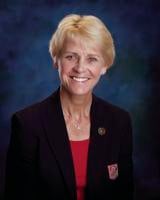
State Rep. Carolyn Justice (R-Pender), who served on the General Assembly’s mental health commission for three years, says today’s mental health system in the state is a product of the privatization of local mental health providers years ago.

“The overriding issue is the mental health reform that happened five or six years ago,” Justice said.

Until that time, Justice said the local mental health provider for Brunswick, New Hanover and Pender counties was Southeastern Mental Health.

“They were not just the place you went, but they were the provider of services,” Justice said.

Justice described Southeastern Mental Health as the “fail safe of the community,” for people who could not afford private mental healthcare.

With the mental health reform, Justice said Southeastern Mental Health went from the provider of mental health services to the facilitators of mental health services.

“Southeastern Mental health and the services they provided to this county are sorely missed,” Hewett said.

Both Justice and Hewett, who spoke before the General Assembly’s mental health commission at Justice’s request, say the statewide mental health system needs an overhaul, not just at the local level.

But before any relief for the mental health system comes to the North Carolina, Hewett said taxpayers will be forced to foot the bill for inmates’ referrals to private mental healthcare providers.